Shaping the future of manufacturing through digital transformation
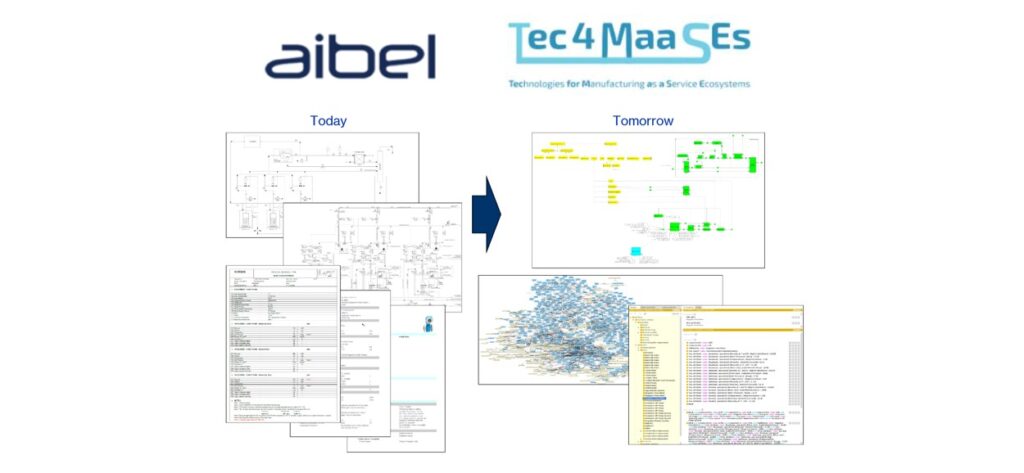
Aibel is participating in Tec4MaaS to explore new approaches for managing complex information exchanges in facility development projects. Aibel faces challenges with traditional document-based workflows that often lead to inefficiencies and delays. Through this project, the company examines whether digital frameworks like the Information Modelling Framework (IMF) and Asset Administration Shells (AAS) can improve data consistency and collaboration across the lifecycle. The initiative aims to assess practical benefits and limitations of structured, machine‑understandable information in real-world scenarios.
The organisation
Aibel is a leading provider of EPCI services (Engineering, Procurement, Construction, and Installation) who designs, builds, and maintains offshore platforms and other critical infrastructure for the energy industry. The company is one of the largest suppliers of innovative and sustainable solutions on the Norwegian continental shelf. In addition, Aibel holds strong positions within the European offshore wind industry and in the electrification of offshore oil and gas installations and onshore processing plants. 5,300 employees work at the company’s offices in Norway, Thailand and Singapore. Aibel owns modern yards in Haugesund, Norway, and in Laem Chabang and Map Ta Phut, Thailand, with significant prefabrication and construction capacity. Aibel is owned by Ferd (50%), Ratos (32%) and Sixth Swedish National Pension Fund (18%).
Confronting industry challenges with next‑generation technologies
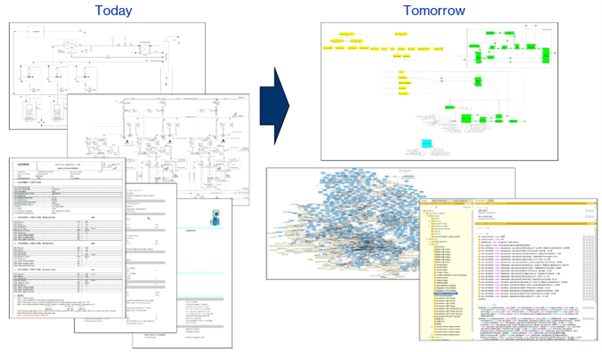
The development of hydrogen facilities requires iterative, information‑intensive interactions between AIBEL and its providers. Currently, these exchanges are managed primarily through static documents such as PDFs and spreadsheets, which are susceptible to errors, delays, and inefficiencies. Although theories and frameworks attempt to address these challenges, their practical application requires supporting technologies and greater standardization.
In this project, we aim to understand how, and to what extent, the Information Modelling Framework (IMF), and standardized digital representations of assets, can empower us to seamlessly exchange, capture, and represent information, requirements, and knowledge across the industrial lifecycle. This includes the use of emerging ontologies built in OWL 2 DL and validated through SHACL. It also involves the digital twin containers defined by the AAS metamodel in Industry 4.0, as well as making use of published submodel templates to ensure consistency and interoperability.
Next steps in our vision
A T4M‑enabled MaaS ecosystem, designed to adapt to industry needs, grow with new services, and integrate components effectively, holds significant potential as a central enabler of digital transformation in the manufacturing industry. Unlocking this potential requires extending the ecosystem with advanced validation services for Asset Administration Shells (AAS) and enhancing dataspace connectors to enable more efficient, interoperable, and trusted data sharing. Together, these enhancements will streamline the procurement and delivery of complex, customized, or engineered equipment, ensuring greater efficiency and trust in collaborative processes.